Though metal braces have been making a comeback, a lot of people aren’t thrilled at the thought of sporting a mouth full of brackets and wires as an adult. And we get it! Whether you have a public-facing job or you don’t want to deal with irritation and food restrictions, you’re definitely not alone.
The good news? There are alternatives to braces for adults, including clear aligners that actually straighten your teeth and cosmetic dental treatments that can make teeth look straighter.
At Nest Dental, we offer solutions such as Invisalign®, bonding, and porcelain veneers, but these treatments work differently, and the best choice depends on your tooth alignment, oral health, and the results you’re hoping for.
In this post, we’ll explore how to straighten teeth without braces, the possible options, and what to consider before choosing a treatment.
Can You Fix Crooked Teeth Without Braces?
Absolutely! Traditional metal braces aren’t the only way to straighten teeth. Clear aligner systems like Invisalign use a series of custom-made, removable trays to gradually shift teeth into better alignment.
Invisalign can be effective for treating common orthodontic concerns, including:
- Crowded or crooked teeth
- Gaps between the teeth
- Overbites
- Certain underbites
- Crossbites
- Open bites
- Teeth that have shifted after past orthodontic treatment
The key difference between Invisalign and cosmetic treatments is that Invisalign physically moves your teeth, while options like veneers and bonding change the appearance of teeth without correcting their underlying positions.
If your goal is to enhance your smile’s appearance, fix misalignment, and improve how your upper and lower teeth fit together (your bite), adult orthodontics with Invisalign might be the best route.
However, if your bite is already healthy and you only have mild alignment concerns, bonding or veneers could be worth exploring.
Why Do Adults Look for Alternatives to Braces?
For most of our adult patients, the biggest concern isn’t necessarily the effectiveness of braces but how orthodontic treatment will fit into their everyday life.
Traditional braces are noticeable, require changes to your diet, and make brushing and flossing more time-consuming. The brackets and wires can also cause irritation or break, necessitating repair appointments.
Fortunately, modern teeth straightening options can help you bypass many of these concerns without sacrificing results.
How to Straighten Teeth Without Braces: What Are My Options?
Invisalign for Adults: A Clear Alternative to Braces
If you ask any dental professional how to fix crooked teeth without braces, Invisalign is sure to come up.
Invisalign involves a series of custom, plastic aligners crafted according to your dentist’s specifications. Each set of aligners is designed to achieve specific tooth movements, and as you progress through the series, your teeth incrementally shift into place.
At Nest Dental, we use digital scanning and computerized treatment planning to map out your Invisalign treatment and help you visualize your future smile.
What are the Benefits of Invisalign for Adults?
Invisalign for adults has a number of advantages, namely:
- Invisalign aligners are clear and fit snugly over your teeth, making them virtually invisible.
- Unlike braces, Invisalign aligners can be removed when you eat, drink, brush, and floss, so you don’t have to avoid foods like popcorn, nuts, or crunchy veggies, and you can maintain your regular oral hygiene routine.
- The aligners are made from a smooth, thermoplastic material, with no metal components that can irritate your lips or cheeks like braces can.
- Clear aligners can address a range of concerns, from slightly crooked teeth to more comprehensive alignment issues.
- Our Vancouver Invisalign dentists create a customized treatment plan and even let you see a smile preview.
- Straight teeth are easier to clean, which may reduce your risk of cavities and gum disease. Invisalign treatment can also reduce uneven or excessive enamel wear and help you speak and chew more efficiently.
- Invisalign clear aligners can treat functional concerns in a way that veneers and cosmetic bonding cannot.
What are the Disadvantages of Invisalign?
Some potential drawbacks of Invisalign include:
- You’ll need to keep track of the aligners and commit to wearing them for 20 to 22 hours per day.
- Invisalign treatment can take anywhere from six to 24 months, depending on your case.
- Because you take your aligners out to eat and drink, frequent snackers might find it inconvenient.
- While we can address more cases than ever before with clear aligners, not everyone is a candidate.
Is Invisalign as Effective as Braces for Adults?
For many adults, Invisalign can achieve results comparable to traditional braces.
For more complex cases, your clear aligners may be paired with tooth-colored attachments bonded to certain teeth and Invisalign rubber bands. The effectiveness also depends on compliance (i.e., wearing your aligners as directed).
At Nest Dental, our dentists will evaluate your teeth, gums, and bite to determine if Invisalign is the best option for your needs and goals.
Porcelain Veneers: A Smile Makeover Without Braces
Porcelain veneers are thin, custom shells that are bonded to the front surface of your teeth.
They can improve the appearance of:
- Slightly crooked or uneven teeth.
- Small gaps between teeth.
- Teeth that look too short or irregularly shaped.
- Discolouration and stains that don’t respond to whitening.
- Minor chips and cracks.
- Worn edges.
- Surface defects like pitting.
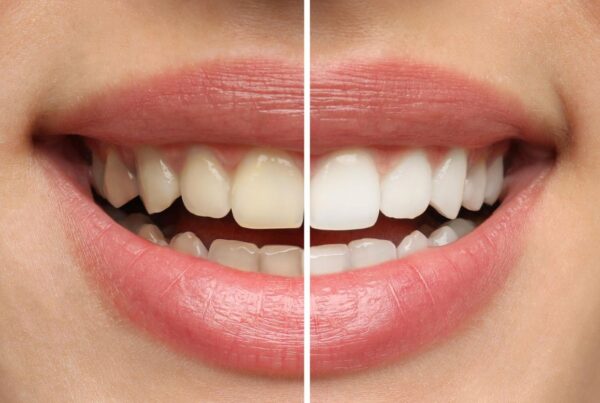
Because veneers mask imperfections and change the shape and proportion of your teeth, they can create the illusion of a straighter smile without orthodontic tooth movement.
At Nest Dental, we use smile design technology to plan your veneers according to your facial features, smile proportions, and aesthetic preferences. You can preview your results and provide feedback before your permanent restorations are made.
What are the Benefits of Porcelain Veneers?
Porcelain veneers can:
- Address multiple concerns with a single procedure.
- Provide immediate results once your final restorations are in place.
- Give you a dramatic smile makeover.
- Last 10–15 years or more with proper care.
- Look and feel just like natural teeth.
What are the Disadvantages of Veneers?
As with any treatment, there are also drawbacks to veneers for some patients, including:
- A little bit of natural enamel needs to be removed for the veneers to fit, so treatment is largely irreversible.
- Veneers can’t correct your bite or the underlying problem causing your misalignment.
- They may not be the right option for moderate to severe crowding, crookedness, or spacing.
- Porcelain veneers are durable but can require replacement down the road.
Cosmetic Dental Bonding: A Quick Fix for Minor Misalignment
Cosmetic dental bonding is another way to make mildly crooked teeth look straighter without braces. The treatment involves applying a tooth-colored composite resin to your teeth, then carefully shaping and polishing it so it blends in with your natural enamel.
Bonding can help with:
- Slightly crooked or misaligned teeth.
- Small gaps between teeth.
- Teeth that look too short or irregularly shaped.
- Small chips and cracks.
- Discolouration and surface defects.
- Uneven or worn tooth edges.
By adding the resin to specific areas, our Vancouver cosmetic dentists can create more balanced tooth shapes and proportions, giving your smile a straighter, more symmetrical appearance without actually moving your teeth.
What are the Benefits of Cosmetic Bonding?
Cosmetic dental bonding offers several advantages, including:
- Treatment can usually be completed in a single visit.
- Bonding is very affordable and costs a lot less than Invisalign or veneers.
- Little to no natural enamel needs to be removed.
- Cosmetic bonding can address several concerns at once, like small gaps, chips, or worn teeth.
- The resin is colour-matched and shaped to blend with your smile.
What are the Disadvantages of Bonding?
While bonding can be an excellent solution for minor aesthetic concerns, the treatment does have some limitations, such as:
- It doesn’t actually straighten your teeth or correct bite problems.
- Composite resin isn’t as stain-resistant or durable as porcelain and can chip, discolour, or wear over time.
- Bonding usually needs to be touched up or replaced periodically.
- It’s not suitable for significant crowding, crookedness, or spacing.
Invisalign vs. Veneers vs. Bonding: Which One is Best?
While all three treatments can improve the appearance of your smile, they accomplish different things. Here is a quick comparison chart of these alternatives to braces for adults.
| Invisalign | Porcelain Veneers | Cosmetic Bonding | |
| Actually moves teeth? | Yes | No | No |
| Best for | Crooked teeth, crowding, gaps, bite problems | Mild cosmetic misalignment and multiple aesthetic concerns | Small gaps, slightly crooked teeth, chips, and minor shape irregularities |
| Treatment time | Several months or longer | Usually a few appointments | Often a single appointment |
| Removable? | Yes | No | No, but bonding is generally reversible |
| Changes natural enamel? | No, unless minor reshaping is needed after treatment | Requires some enamel removal | Little to none |
| Long-term results? | Results can last a lifetime if retainers are worn | Can last 15+ years with proper care, but eventual repair or replacement may be needed | Lasts an average of three to 10 years, but touch-ups and replacement will likely be needed over time |
If you’re mainly concerned with straightening your teeth, Invisalign is usually the best option because it addresses actual teeth alignment.
If your teeth are already positioned reasonably well and you want to make small cosmetic enhancements, bonding or veneers could be good alternatives.
For some adults, combining treatments can produce the best outcome. For example, Invisalign can move teeth into better alignment before bonding or veneers are used to refine their shape.
Am I Too Old for Invisalign or Other Adult Orthodontic Options?
Not at all! There’s no age limit on getting a straighter, more confident smile. As long as your teeth, gums, and supporting bone are healthy enough for treatment, you can be a candidate for Invisalign or other forms of adult orthodontics in your 30s, 40s, 50s, 60s, and beyond.
In fact, many adults decide to pursue teeth straightening later in life because they finally have the time, financial resources, or motivation to fix something that’s bothered them for years.
Others seek treatment because their teeth have shifted since they wore braces as a teenager.
While there can be some additional considerations if you have existing dental implants or a dental bridge, these factors don’t automatically rule out Invisalign.
The best way to find out if you’re a candidate is to schedule an evaluation with an Invisalign dentist like the team at Nest Dental.
Alternatives to Braces for Adults: FAQs
What is the best alternative to braces for adults?
For adults who want to truly straighten their teeth without braces, Invisalign can be an excellent solution.
Our experienced Vancouver Invisalign dentists can use the removable clear aligners to correct many common alignment and bite problems in a way that fits your life.
However, the best treatment depends on your bite, oral health, and the complexity of the tooth movements required.
What is the fastest way to straighten teeth without braces?
To mask the appearance of very minor spacing or crookedness, cosmetic bonding is the fastest option. Porcelain veneers also provide quick results. However, neither treatment changes the position of your teeth.
To move your teeth into better alignment, Invisalign does take time, but you’ll also enjoy oral health, aesthetic, and functional benefits. And for mild cases, limited Invisalign treatment can sometimes be completed in a few months.
The bottom line? The fastest option depends on whether you need orthodontic correction or only a cosmetic enhancement.
Can I straighten my teeth naturally at home?
No. There is no safe, proven way to straighten crooked teeth at home using exercises, finger pressure, rubber bands, or DIY devices.
Moving teeth requires carefully controlled forces and professional oversight. Attempting to shift your teeth yourself can permanently damage your teeth, gums, and supporting bone and even lead to tooth loss.
Is Invisalign worth it for adults?
For many adults, Invisalign is worth it because it offers a discreet, removable, comfortable way to straighten teeth and align the bite.
By moving teeth into their ideal positions, treatment can:
- Make teeth easier to clean, potentially reducing your risk of cavities and gum disease.
- Support proper chewing and speech.
- Prevent injury to protruding teeth.
- Evenly distribute bite forces to reduce excessive or uneven enamel wear.
- Provide a more youthful appearance by giving the lips and cheeks support.
- Boost your confidence!
However, whether it’s the right investment depends on your goals, treatment needs, and willingness to wear the aligners consistently.
To learn more, read: “Is Invisalign Really Worth It for Adults?”
How much does Invisalign cost for adults?
The cost of Invisalign for adults depends on several factors, including the complexity of your case, your smile goals, and how many aligners you require.
At Nest Dental, we aim to make adult Invisalign affordable. We accept most insurance plans and offer no-interest Invisalign financing options.
For a more comprehensive look at the topic, check out: “How Much Does Invisalign Cost in Vancouver?”
Can I get Invisalign if I have crowns, bridges, or dental implants?
You can get Invisalign if you have dental crowns or fillings because the treated teeth will still move in response to orthodontic force.
Dental bridges move as a unit, so your dentist will need to account for that in your treatment plan.
Dental implants, on the other hand, are fixed in the jawbone and cannot be moved with aligners. In some cases, you can still benefit from Invisalign, but tooth movements may be limited.
Your dentist will assess your teeth, bite, overall oral health, and restorations to determine what’s possible.
Explore Alternatives to Braces for Adults at Nest Dental
Whether you’re interested in Invisalign to correct crooked teeth or cosmetic bonding or veneers to hide minor imperfections, our Vancouver dentists can help you weigh your options.
At Nest Dental, we combine digital technology with personalized treatment planning to find solutions that fit your smile goals, oral health needs, and lifestyle.
Schedule a consultation at our Fraser Street dental studio today!